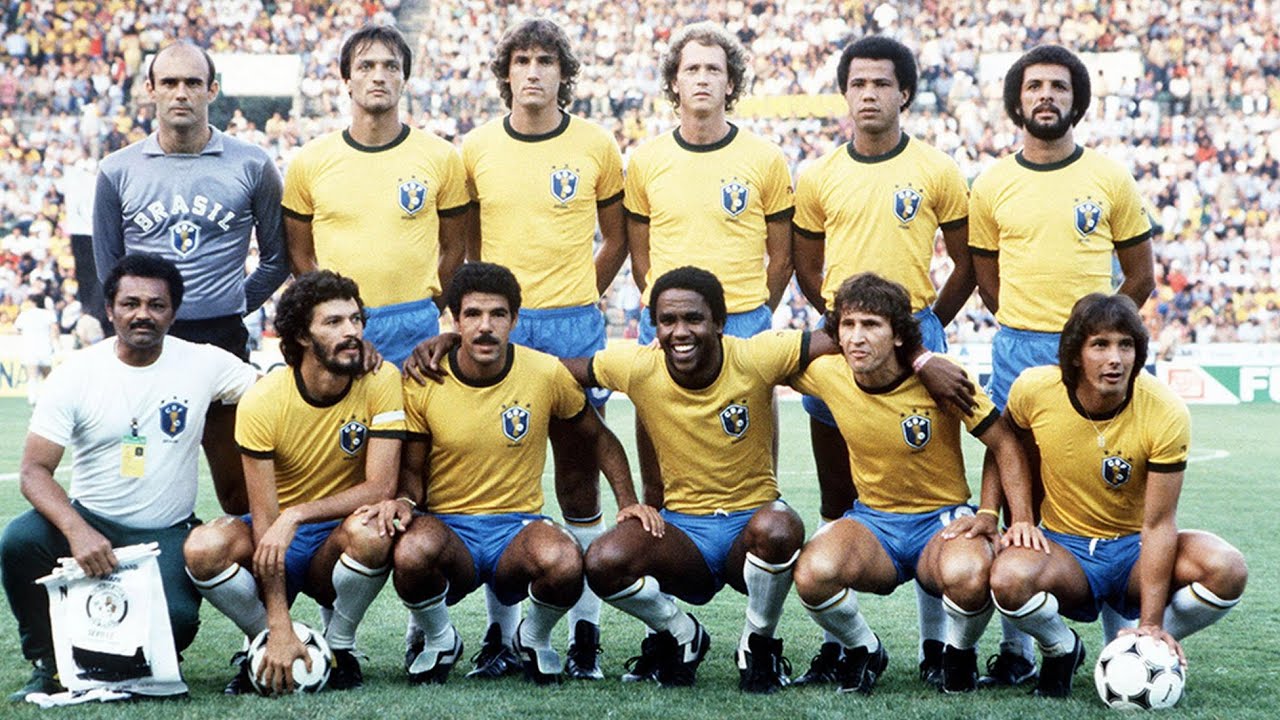
There was a time in world football when you could almost identify a team’s nationality simply by watching them play.
The English played with speed, power, long balls into space and an almost stubborn preference for directness. Playing for the set piece was preferred over long term buildup since they were very good at scoring from those plays; direct kicks and corner kicks were the, pardon the pun, cornerstone of the English game.
Spain, on the other hand, invented a style that was a hybrid of the Italian and Brazilian schools, and once that was pioneered by the tiki-taka style that originated in Barcelona. By the early 2000’s, the Spanish style was all about unlimited possession, using a seemingly interminable sequence of short passes that pinged all over the field. Holding the ball was seemingly more important than scoring. The goal was to wear out the opposition who had to defend for the majority of the game, a task that renders not only physical, but more importantly, mental exhaustion on opponents.
In the modern era of globalized squads and managers trained in the same tactical schools, those distinctions have largely blurred. Clubs borrow ideas from everywhere. A Spanish team can counterattack like an English one. An English club can suffocate opponents with possession like a Catalan side.
But occasionally, football reminds us of what it used to look like.
Barcelona’s 1–1 draw with Newcastle in the Champions League on March 10 felt like one of those reminders.
Because for ninety minutes, it looked almost like a duel between national football identities.
Newcastle played the quintessential English game. For a large part of the first half, pace and energy was prevalent. Direct balls into space. Power through the midfield. When they won possession they wasted no time turning defense into attack, driving forward with the kind of vertical urgency that has defined English football for decades.
Barcelona, meanwhile, were unmistakably Spanish. Possession first. Patience paramount. The ball moved side to side as they searched for angles and seams, preferring elaborate buildup over sudden bursts forward. If Newcastle’s instinct was to launch the ball into open space and chase it, Barcelona’s instinct was to slow the game down, control it, and carve their openings with finesse.
For the first fifteen minutes, Newcastle’s style looked overwhelming.
They came out like a storm — pressing, sprinting, forcing Barcelona into hurried passes and uncomfortable clearances. The tempo was ferocious, the kind of pace that makes technically gifted teams feel rushed and slightly disoriented.
But that kind of fury is rarely sustainable.
Gradually Barcelona began to regain control of the ball and, with it, the rhythm of the game. Possession tilted back toward the Catalans as they circulated the ball through midfield and attempted to impose their usual geometry on the match.
Yet just before halftime Newcastle reminded everyone what their preferred version of the game looked like.
They surged forward again, attacking with speed and purpose, whipping balls into dangerous areas and winning corner after corner. By the break they had accumulated six corners despite having roughly 13% less possession than Barcelona — a perfect statistical summary of the contrasting approaches. Barcelona held the ball; Newcastle made the moments count.
From the restart until roughly the 80th minute, the match settled into something of a stalemate. Barcelona passed, probed, recycled possession. Newcastle stayed organized and disciplined, choosing their moments rather than constantly chasing the game.
Even the TUDN commentators made the same observation that was evident to anyone watching: Newcastle had managed to dictate the rhythm of the match. Barcelona had possession, yes, but not control in the way they usually enjoy it. The English side had slowed the game just enough to disrupt Barcelona’s brand of football.
Chances were scarce. The game felt tense rather than explosive.
And then, late in the match, Newcastle finally found the solution.
In the 86th minute the breakthrough came not through some elaborate tactical masterpiece but through one of football’s simplest combinations. A quick give-and-go opened a sliver of space. A low, hard cross flashed across the penalty area and found Newcastle’s Harvey Barnes unmarked at the far post for a simple tap in.
It was brutally efficient — the kind of direct attacking sequence that had defined Newcastle’s play all night.
The Magpies had finally solved the Barcelona defense. And it looked like they would take a one goal lead into Spain for the return leg.
But football has a cruel sense of timing.
Deep into stoppage time, in the 94th minute, Barcelona found their lifeline. Dani Olmo received the ball just inside the penalty area and executed a subtle but devastating piece of skill: a feint to the left that froze the defender, followed by a quick dribble to the right that drew the inevitable foul and ensuing PK.
Lamine Yamal stepped up and finished it with the calm that has already become his trademark. The equalizer came with surprising ease, the stadium erupting in relief as much as celebration.

And just like that, a match Newcastle had largely controlled slipped away.
In truth, this was one of Barcelona’s poorest performances in many years. They struggled with Newcastle’s pace, looked uncomfortable under pressure, and never truly established the dominance that usually accompanies their possession-heavy style.
Yet somehow they escaped with a draw.
Football is often like that. One team plays closer to its ideal game, but the scoreline refuses to cooperate.
Newcastle will leave wondering how they did not win. Barcelona will go back home knowing they were fortunate. The second leg suddenly looks far more interesting than anyone might have expected.
Extra Time
Olmo’s goal was a result of a piece of tactical genius from Hansi Flick. Olmo came in late in the game and played the first 10 minutes at the back, using the Volpian buildup where a 6 plays on the last line of defense to help with the build of play from the back. This is odd given that Olmo is neither a defender or a midfielder but a forward. Having put the Newcastle defense to sleep, Olmo quietly slipped to the front, where his sudden move at the top of the box drew the PK that would produce the equalizer.
 futbolstuff