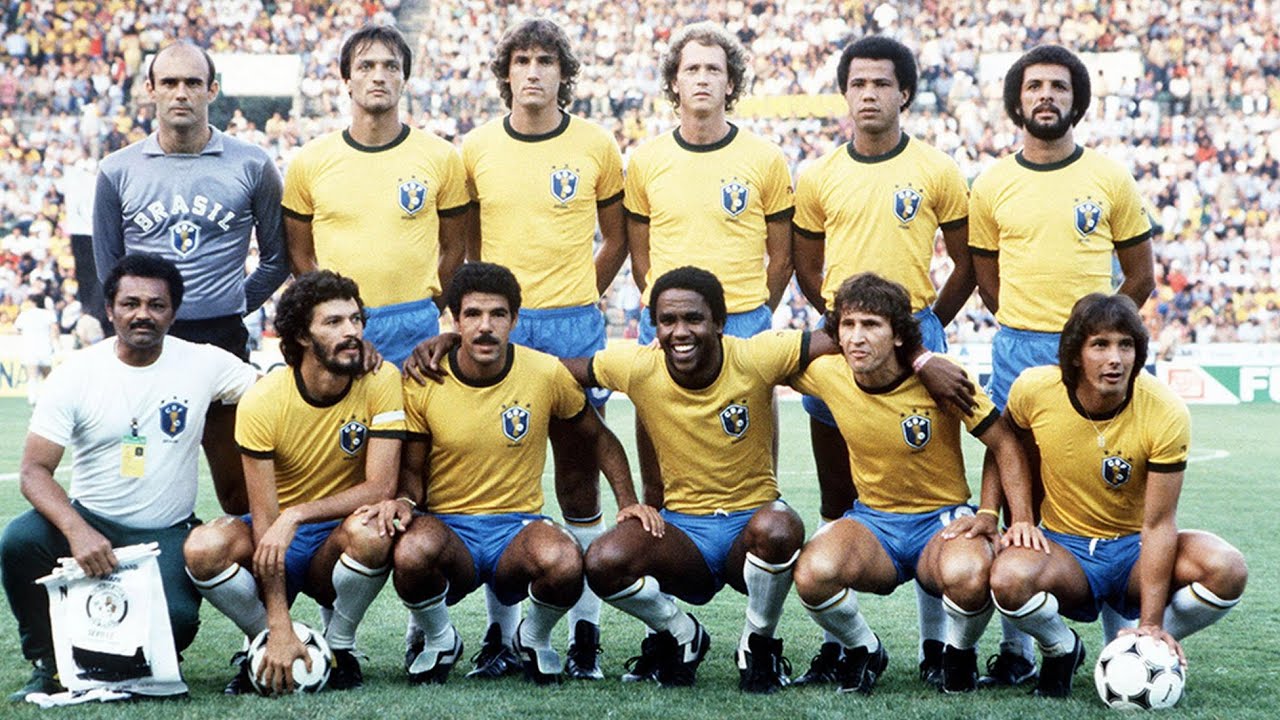
Canada’s best Barcelona impersonation wasn’t enough
It was a week that will live in U.S. hockey lore, not because the stars aligned in some cosmic upset, but because of the beautiful, maddening, unpredictable alchemy that is Olympic ice hockey.
Canada came into that gold-medal game looking every bit the favorite. From the drop of the puck they looked like the better team — faster in transition, more precise on the breakout, more creative in the offensive zone. But in hockey, just as in football, Canada’s speed and beauty of their game – suffocating forechecking, crisp line changes, immaculate puck control – is reminiscent of how FC Barcelona dominate teams.
But just like Barcelona at their peak, you can be beautiful without winning. In the Olympic hockey tournament just as in the Champions League, aesthetics can enthrall, it can fascinate, but in the end it isn’t always triumphant.
Because in hockey, unlike almost any other sport, a hot goaltender can win a game almost by himself. And on this night in Milan’s Santagiulia arena, lightning struck between the pipes for the United States.
For 46 years the U.S. had waited for this moment. Forty-six years since a men’s hockey team had stood atop the Olympic podium. But unlike 1980 — when amateurs toppled professionals and hearts soared in disbelief — this time the roster was stacked with NHL players, battle-tested pros who make their living on the frozen chessboard. So while the drought was long, the result wasn’t quite as seismic as that earlier miracle. This was heavyweights trading blows, not college upstart kids shocking the world.
Despite trailing for most of two periods, Canada was the superior team. They controlled the tempo like a possession-obsessed soccer side, carving the ice with patience and precision. The Canadians cycled the puck, trapped defenders in their own zone, and skated with the confidence of a unit accustomed to dictating every inch. Yet they trailed after just 6 minutes when Matt Boldy of the Minnesota Wild split two Canadian defenders at the blue line by lifting the puck into the air (a very inventive move) and rushing in on the goaltender before scoring a nice goal.
After the goal, the Americans, by contrast, were the counter-attack specialists. Not by choice but by necessity. When you play the Canada’s of the game, you can’t often play on the offensive. The Canadians are so good that they force you to play the way the US did: they defended deep, clogged the neutral zone, and waited. Waited for Canadian mistakes, waited for seams to open, waited for their moment to strike. This was tactical pragmatism at its best — the hockey equivalent of a side that absorbs wave after wave before springing forward on counter-attacks with ruthless efficiency. It wasn’t aesthetic dominance; it was structural resistance.
The lead lasted late into the second period, when Canada’s Cale Makar blasted a low hard shot into the far post. The Canadian pressure finally paid off.
That was the only goal US goalie Connor Hellebuyck would concede.
From the first period to the dying seconds, he kept Canada at bay with saves that felt increasingly improbable. Midway through the opening frame, with traffic crowding his crease, he flashed the left pad to deny a backdoor tap-in that had half the arena rising in anticipation. Early in the second, he stared down a clean breakaway — gloves low, shoulders square — and snatched a rising wrist shot out of the air as if plucking it from a shelf. And in the third, protecting a one-goal lead, he lunged post-to-post to stone a one-timer on the power play, the puck ricocheting off his blocker and harmlessly into the corner as the Canadian bench threw its collective head back in disbelief.
He didn’t just stop the puck — he stole certainty. Every save bent the emotional arc of the game. Every denial tightened the pressure on the skaters in red and white. Canada kept pushing, kept probing, kept playing like the better team. But the crease had become a locked door.
With the game deadlocked at 1, overtime ensued. There is no better spectacle than he Olympic hockey overtime period, when spaces are enlarged by having 2 less skaters. It is a spectacle to watch, a free-flowing exposition of speed and moves unhindered by excessive physicality. It’s too bad it doesn’t last very long most of the time. Such is the skill of the players that the advantage always goes to the offense.
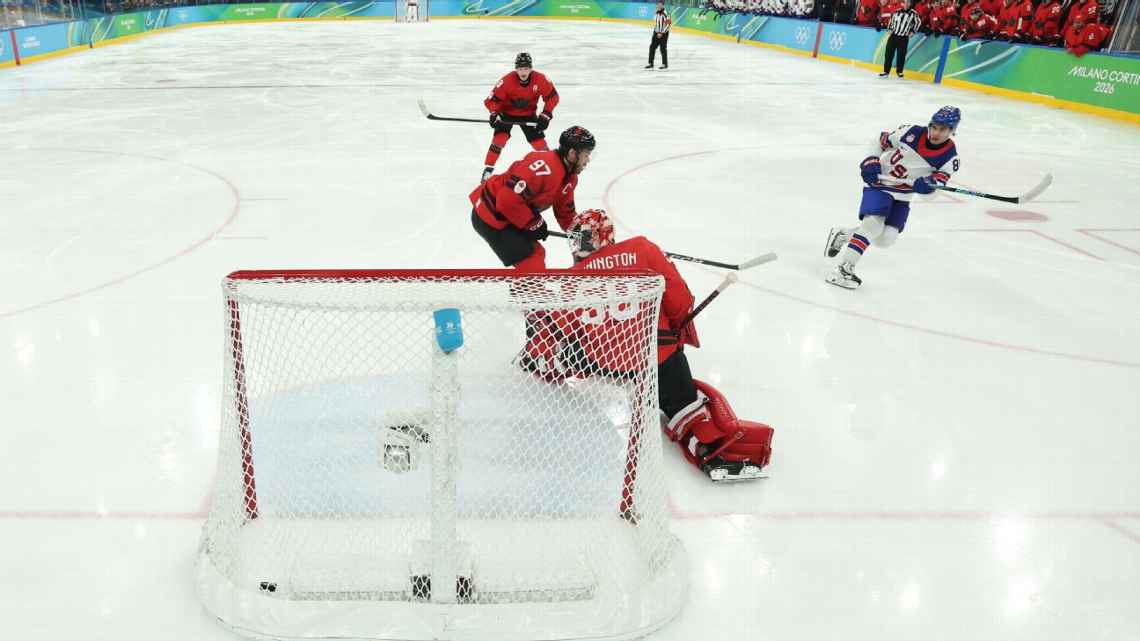
The extra period lasted only a minute and 41 seconds. Connor McDavid, considered by many the finest hockey player in the world (he routinely wins all of the skills competitions and has been the NHL’s leading scorer for the past five years), went in and got a shot on goal, where Hellebuyck stymied him. The US countered, as they had all night, and ended up with a 3-1 break after one of the Canadian players gambled at the US blue line trying to steal the puck. Moments later, Jack Hughes, all alone on the left side, fired a wicket shot past Canada’s Jordan Binnington.
In most sports, the MVP is a scorer. In hockey, sometimes the MVP is the last line of defense — the masked figure who can warp probability for sixty minutes. And on this night, the best player on the ice wore American colors.
Canada may have been superior across the sheet — in possession, in territorial play, in sustained attack. But hockey uniquely allows one transcendent performance in goal to outweigh all of that. The position carries disproportionate gravity; when a netminder ascends into that rarefied zone, the entire geometry of the sport shifts.
So when the final horn sounded and the Americans celebrated gold, it wasn’t theft. It wasn’t fortune smiling blindly. It was a deserved victory anchored by the single most dominant force in the game.
Because in ice hockey, if the best player on the ice is your goalie, that fact alone can be everything.
 futbolstuff