Barca’s Incredible Week

Loses 7-6 on aggregate in Champions League Semifinal to Inter Milan

Beats Real Madrid 4-3 in the last El Clasico of La Liga.

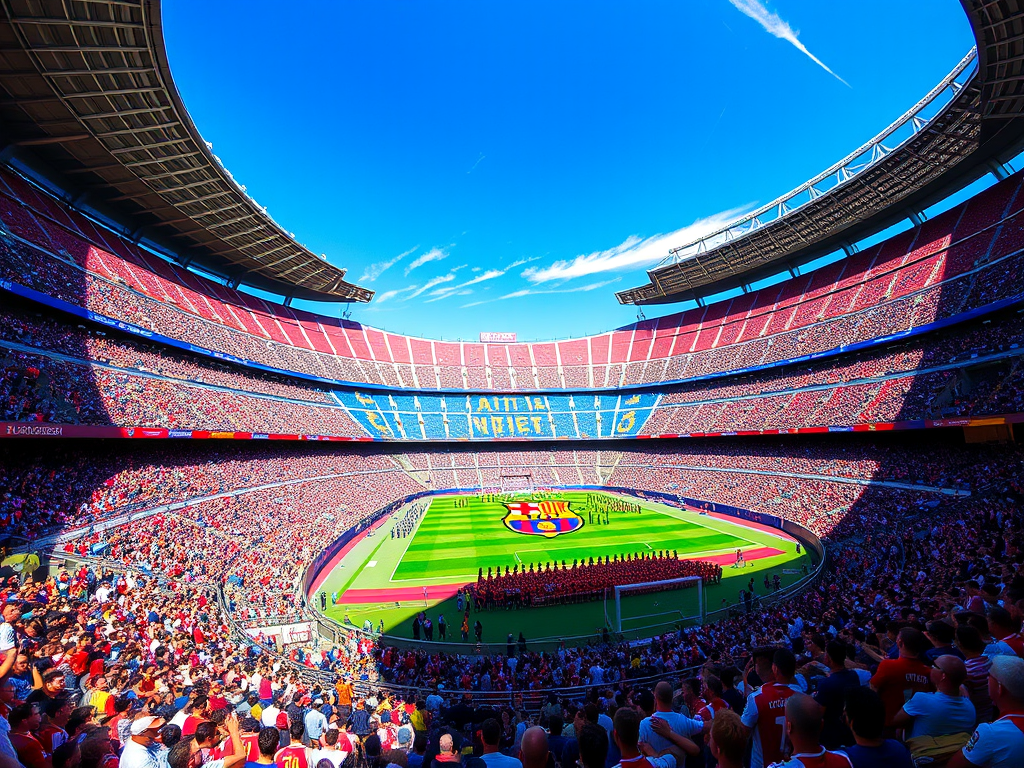
The Champions League Leg

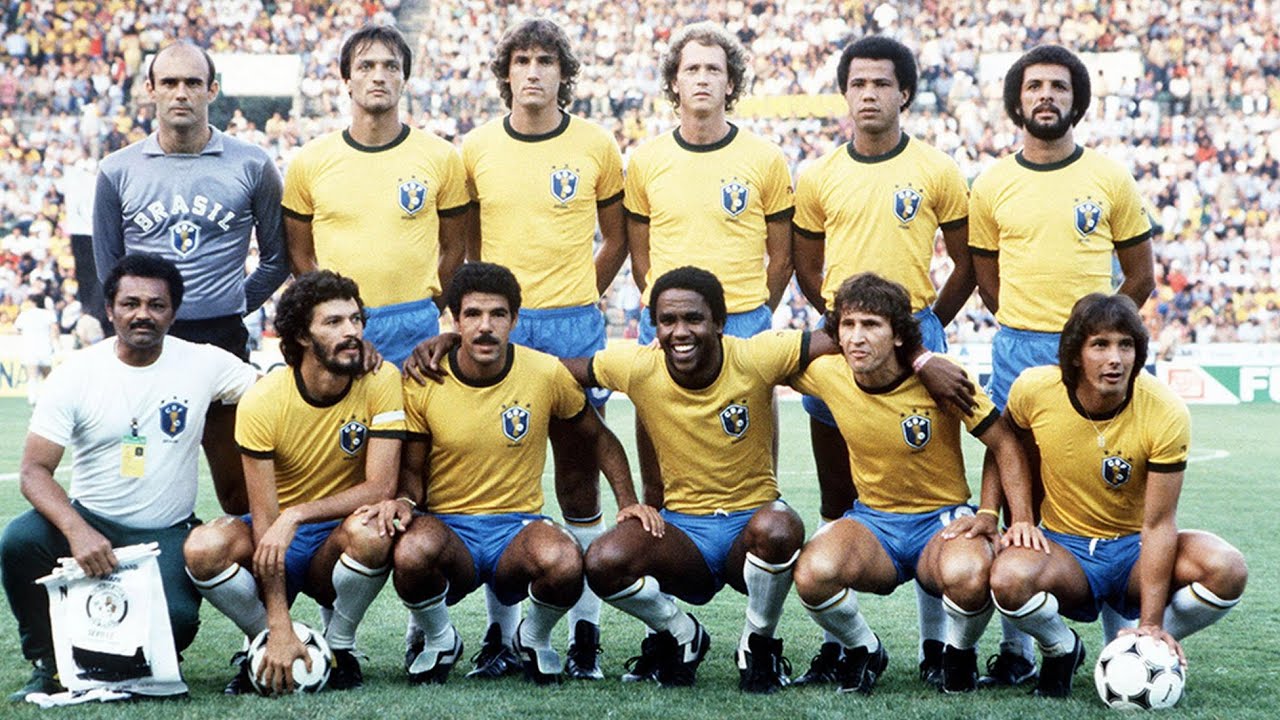
Socrates, Brazil’s soccer and philosopher once said about his country’s style: “Beauty comes first, Victory is secondary. What matters is joy.” Those legendary and eloquent words best describe what transpired in the two legs of Inter’s win over Barcelona in the Champions League semifinal.

Socrates’ philosophy was expressed by Inter’s coach Simone Inzaghi in another way:“I am extremely proud of the performance my squad has put in, because tonight we faced one of the most offensive and beautiful teams in the world.”

From whatever perspective you viewed this game, as either a fan of the defeated Barcelona team espousing Socrates, or as a fan of the victorious Inter Milan side who must have held their breath the entire time and come away delighted at a victory that they probably shouldn’t have attained, one thing is abundantly clear: these two legs will go down as one of the best and most entertaining in Champions League history. The two matches were not only dramatic to witness, they were also beautiful to watch.

The sheer number of goals, lead changes (and their accompanying momentum swings and dramatic turns) evinced a drama that is not often seen at the latter stages of Champions League competition, when more defensive strategies tend to rule the day. Because teams are so averse to losing, they tend to not take unnecessary risks, especially late in games that are tied, favoring advancement over anything else. Flick’s teams do not play that way. They do not betray their style; they double down on it. Because they do not ever betray their style, their defensive high-line persists, and they tend to also give up a lot of goals. Simply put, Flick’s mantra is we will outscore you.

While this strategy has worked for Barca all season long, in the Champions League return leg,  Inter were up to the task. In a see-saw battle (Inter were up 2-0, Barca stormed back to lead 3-2, Inter upped Barcelona with 2 unanswered goals for the final 4-3), Barcelona were not content with managing their 3-2 advantaged and instead continued to insist on a 4th instead of just defending, and in the depths of injury time, were stunned by an improbable and unbelievably highly skilled goal from Inter’s center back. The Milan defender, Francisco Acerbi had scored all of 2 goals in 37 appearances in the Champions League, but in the 93rd minute his sublime redirection of fast moving cross into the box (with his wrong foot no less) just eluded Czesny left hand for the 3-3 equalizer that would send the game into extra time. Drama this good can only be conceived in the writing room. The surreal goal gave Inter the momentum and they didn’t relinquish it. In extra time, Inter scored a very Barca like goal, pinging the ball inside of the penalty box with stunning precision before one of their substitutes, Davide Frattesi received the ball and waited a slight moment before firing the ball past the Barcelona goalie. The irony of that goal must have been too much on the Barca players. While they continued to look for the tying goal that would take them to penalty kicks, one couldn’t help but observe how tired, both physically and emotionally, the Barcelona players were at that point.

Inter had somehow flipped the script on Barcelona and that led them to the Champions League final against PSG, a team, curiously enough, that plays a style very similar to Barcelona.

The El Clasico Leg

Content upcoming…

Arsenal Pyrrhic Victory over Real Madrid

Arsenal defeats Real Madrid 3-0 in the first leg of Champions quarterfinals.

Return Leg

Let’s start by making a bold prediction. Real Madrid, down by 3 goals to a very good Arsenal team, a team that is second in the world’s toughest league, a team led by Spaniard Mikel Arteta, a team that plays an elegant style of football reminiscent of the Barcelona glory teams from 2008-2011, will make an astonishing comeback and defeat the Gunners before it is all said and done and advance to the semi-finals.

This prediction is based on both qualitative and quantitative analysis. The quantitative part of the equation is based on the fact that Real Madrid have won this competition 15 times and Arsenal have never won, and also because Real has proven itself, over the last decade, to be a Premier League vanquisher (Liverpool twice, Man City twice). Real Madrid have played in 502 UCL games and won 302 with 85 draws and 112 losses, so they only lose 22% of the time. I was unable to find statistics for how many home games Real has lost in this competition but extrapolating from the numbers above, it would seem fair to say that Real has probably only lost at home 50 times in 55 years of competition, or only about 1 a year. So their chances of winning at home are very high again.

The qualitative side is simple. It is not based on any tactical analysis and is simply a gut feel. It is based on the fact that Real Madrid are the best team in the history of club soccer, the most successful in this particular competition, and also because the return leg is in their home stadium, a place where they rarely lose in Champions League (see above). Real vanquished Liverpool in a somewhat similar manner in 2023 when it scored 5 straight goals after the Reds took a 2-0 nil lead in the first 15 minutes in the first leg at Anfield. Although the circumstances are somewhat different here, these Madrid players know what they are capable of simply because they have done it recently before (see video highlights at bottom).

This squad, after having been embarrassed in London, will be more than ready in the return leg. Winning championships is in the DNA of this team; their success in this tournament is simply unsurpassed. When a player signs on to play for the Merengues, they know the history, they know the height of expectations and responsibility placed on them, and most often than not, the players rise to the challenge, no matter the obstacle. The fans, accustomed to Real’s winning pedigree, always create an extremely hostile environment to away teams. The atmosphere next Tuesday at the Bernabeu should be as electric as ever given the obstacle the Merengues are facing. By the time Real get that first goal, it will be increasingly difficult for them to withstand the tsunami that is about to hit them. The first 15 minutes will be key. We will find out very soon how good the Gunners game travels.

First Leg

Arsenal truly dominated this game, creating numerous chances and forcing numerous saves  from Courtois to keep the game scoreless in the first half. Arsenal had 69% possession in the first 15 minutes of the game.

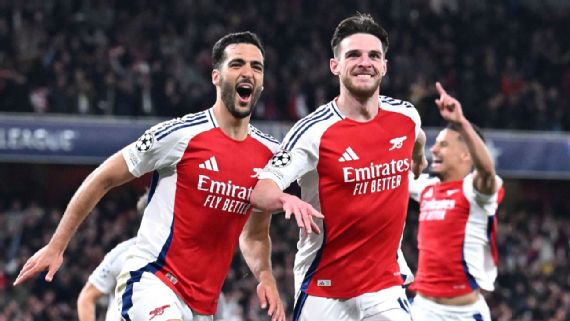
The second half explosion was triggered by Declan Rice, a solid midfield player who had never scored a goal from a free kick, yet managed to score two in a 15 minute span and made history as the first player to score two set pieces in a single Champions League game. (One has to wonder why a player who never has scored off a free kick got the chance to do it not only once but twice. Arteta must have seen or sensed something during the practice sessions). It is important to note that, on the first kick, Courtois made the mistake of only placing 4 players on the wall and Rice was able to curve the ball around the limited wall, the ball bending viciously and seeming to accelerate around the last man as if it were a rocket gaining speed from the gravitational pull of a planet. The second kick was your classic upper corner “postage stamp” goal and was simply unstoppable. My favorite goal was actually Mikel Merino’s sublime finish on a pullback cross from Leandro Trossard. The technical level of that goal was simply amazing. The pace and placement of the ball was of the highest level. Most often than not, those shots go either wide (skewed by too much placement) or high (too much power).

Mike Arteta described this game as “the biggest of his managerial career” and his team delivered. But that’s the beauty of the Champions League format. One game isn’t enough to finish the job. You have to perform at your highest level in two games against the best clubs in the world. The second leg will now surely surmount the first as the most important. If Arsenal can win at Madrid, they will truly have earned it.

Real Madrid overcomes Liverpool’s fast start

Manchester City Victim of its own Success

Real Madrid conquers Manchester City again

Manchester City against Real Madrid has now become, in the infamous words of ESPN, an “instant classic”, or for those more familiar with the English terminology, a Champions League “darby” of sorts. These two teams have squared off the past 3 years in the Champions League in two-legged affairs. The budding rivalry has been elevated to the highest level because not only are these two teams amongst the top clubs in the world, but because the games that they have played have themselves been of the best technical quality, highly entertaining, and quite dramatic. But what has become the most fascinating facet has been the clash of two radically different football philosophies.

Pep Guardiola’s City is the third-generation or version of the style first introduced in Guardiola’s early years at Barcelona, a team that played a style commonly known then and now as tiki-taka (The Spanish team of the 2008-2012 era, which was heavily populated with Barca players, also was renowned and credited with playing that but the style was nascent in the Cruyff Barcelona Academy system). Guardiola then took that system to Bayern Munich in the early 2010’s and finally to City starting in 2016. Guardiola is known to have distilled tiki-taka into its simplest formula: 

“In the world of football, there is only one secret: I’ve got the ball or I haven’t.”  

Guardiola’s teams throughout the years have perfected the left-hand part of the equation in his succinct statement to the point that each team, each generation, is substantially better at the art of possession football than its predecessor. They have the ball the most of any team in the modern era and they are able to do that against any team, from the bottom feeders of the EPL to the very best teams of all of Europe. One of the key factors in this strategy is the ability to win the ball back quickly once possession is lost. This has the effect of not only demoralizing the opposition but more importantly, inducing huge levels of physical and mental fatigue as it forces them to play defense not only for a majority of the game but also for long stretches of time (i.e. minutes) during the game. Guardiola’s teams vaunted high press defensive techniques are just as important of an ingredient to the success of the style, albeit not as aesthetically pleasing, and hence not as glorified.

So what to do if you’re up against a team of City’s caliber ? They are going to have the ball the majority of the time so your only option is to low-press, which is colloquially known as “parking the bus.” It is not a tactic that teams wish to employ (well unless you’re Italian and love catenaccio). It is a tactic that is forced upon them by the quality of the opposition. City imposes its will on you to the point that this becomes your only resource.

But as with any tactic there is a counter tactic. City’s ever increasing dominance of possession over the years has forced teams to retrench farther and farther back into their own goal, thus shrinking the available field of play. Teams used to play defense in their own half, a distant luxury as City presses further and further upfield with their vaunted possession; nowadays it is common for defenses to pack inside of a 30 to 35 yard box from their own goal-line. This counter tactic has now forced City to try to create offense in ever shrinking real estate than ever before. The other aspects of tiki-taka, the false 9 and positional play, tend to have diminishing results as the space in which you are forced to operate is reduced. When playing teams of substantially lesser abilities, which really, in this context, means a less cohesive defensive shape and the ability of its players to adhere to it, City is able to eventually break teams down and win at a high percentage.

Real’s counter was to exploit the high-press with lightning quick counter-attacks with passes over the high-press into space where one of their two speedy and highly-skilled front-runners, Vinny or Rodrygo could run onto the ball and hold it long enough while being defended by more than one player, and then find an open teammate deep in City territory to create opportunities.

Both goals were perfect examples of each team’s brilliantly planned tactics. Real, knowing that they had to score on City’s ground, got their goal early (12’). Carvajal’s long high pass went to Jude Bellingham, who controlled it deftly deep into City territory and away from the press. Bellingham initiated a passing sequence that went through Valverde, then Vinnie, before the latter’s cross found Rodrygo open in the middle, who scored on a second bite of the cherry after Ederson saved his initial shot. After that it was all City the rest of the game. City generated shot after shot (33 total), corner after corner (18 total), before Kevin DeBruyne (76’) got a hold of a weak clearance from Ruddiger, took a little subtle touch (no panic on his part) before roofing into the net.

The game, thus, had gone according to the master plan. City attacked constantly, and Madrid generated enough counters to keep the encounter honest. After DeBruyne’s goal, it seemed like Real would crack, until they didn’t. DeBruyne missed a second clear opportunity minutes after his goal that would have sealed the deal but he put it just high. Madrid survived the onslaught (48 defensive clearances !) not only during regulation but also for the extra time. Their goal, to get the game to the penalties, had been achieved.

In the six games that these two teams played over the past 3 years, Real was the perfect foil to City style. City would get goals but not in the numbers required to win outright. (The only exception to that was in the second leg at the semi-final stage in 2023 when City thumped Real by a 4-0 scoreline that was as dominant a performance that one elite team has put on another in recent memory.) In this last game, City couldn’t win in regulation and was forced to try its luck in the penalty kicks.

City’s two misses in the penalty shootout was its undoing. Madrid’s Modric was the only Merengue to miss. That slimmest of margins was the difference.

Was City the best team ? Undoubtedly. The data doesn’t lie. But Real did just enough to move on yet again. This is the sixth time that Madrid has eliminated City, twice as much as any other team. 

I’m sure another chapter of this instant classic rivalry will play out again next year.

Penalty Kicks:

To the soccer aesthete, the difference between City and Real (or is it City versus any opponent ?) is a matter of style. On the one hand is possession football at its finest: the ability of a team to hold on to the ball for extended possession in compressed space, string together tens of passes per offensive possession, swing the ball around the perimeter of the defense at will, create overloads and mismatches, generate shots and corner kicks ? Or, on the other hand, is counter-attacking football more to your taste: the ability of a team to defend fiercely and then when given the chance to strike back quickly, effectively, and efficiently (i.e. create scoring chances or score outright). It is a matter of do you enjoy a team’s ability to compress footballing space, or do you enjoy a team’s ability to explode into vacant space. I personally am awestruck by the former, but enjoy and celebrate the latter.

What is going with Halland on this team ? I’ve alluded to this before, but after this game I feel even more assured that The Terminator is a misfit for this style. Before City, Halland was well known for his explosions into enemy territory, using his amazing pace and power to beat opponents and score amazing goals. In this scheme, he hardly touches the ball. He seems relegated to trying to score with his head (he did hit the crossbar once today) or cleaning up on rebounds. On a team of creators, he is the least creative of forces.  If you click on the Passes Tab in the “theanalyst.com” site below, you’ll see Halland (#9) on a bubble by himself, disconnected from the rest of the team, all of whose players are connected by a full mesh of passing links.

The answer I think, in the context of what was previously stated, is that Halland is a better player when he’s exploding into empty spaces, where he can use his amazing pace and finishing ability, rather than operating in compressed spaces, where defenders are more efficient against him by being able to be more physical and better able to defend his limited dribbling ability. Hence, he’s limited to headers and cleaning up rebounds and deflections.

Reference: